It may be the "white nights" of St. Petersburg (the sun doesn't really set and it is light all night. ) playing with my head or perhaps the size of the palaces or the length of Russian novels.....something is exciting me enough to write a 700 page blog entry on two days spent at the Russian museum.

The main purpose in visiting was to see the icon collection and headed straight there from the entrance.
The radar was on the lookout for Russian traditional design motifs in icon paintings that could possibly be reproduced with Russian traditional wood block printing on cloth or even stencilled with Japanese stencil techniques. The museum was not busy so you could quietly take iPhone pictures without annoying anyone.


Of course there were beautiful wall tapestries. The colours the Russians got from their indigo (woad sourced) and rose madder was interesting to see. The themes of the tapestries were not interesting but thinking of the plant-dye logistics triggers imaginations. The red madder dyed horse was a bit surreal.


This Bible cover was warmly crafted with a Russian Orthodox Patriarch embellished in folk-like detail.


The Museum is too big. It is a good idea to leave after a few hours to respect and protect from overloading.
The second day's goal was to look at the Russian Folk Craft section. It was a little like Christmas Eve...no sleep and up early walking to the museum and getting here before it opened. The Pushkin statue keeps the early arrivals company.

The museum rooms have been restored to perfection. (Mr Putin in putting some of that oil revenue to good cause. ) Hundreds of years of Russian treasures on display. There are long hallways dedicated with photographs to what had been lost in the Revolution, the Nazi Terror and the Soviet Era. Agony.
The Russian Folk Art area is breathtaking. With economic sanctions on right now it is a good time to visit Russia as prices are low. (The people of the Crimea would welcome your contribution to the Russian economy.) If you can get there it is a fascinating destination. It is only a matter of time before these museums are going to be over run with tour buses.
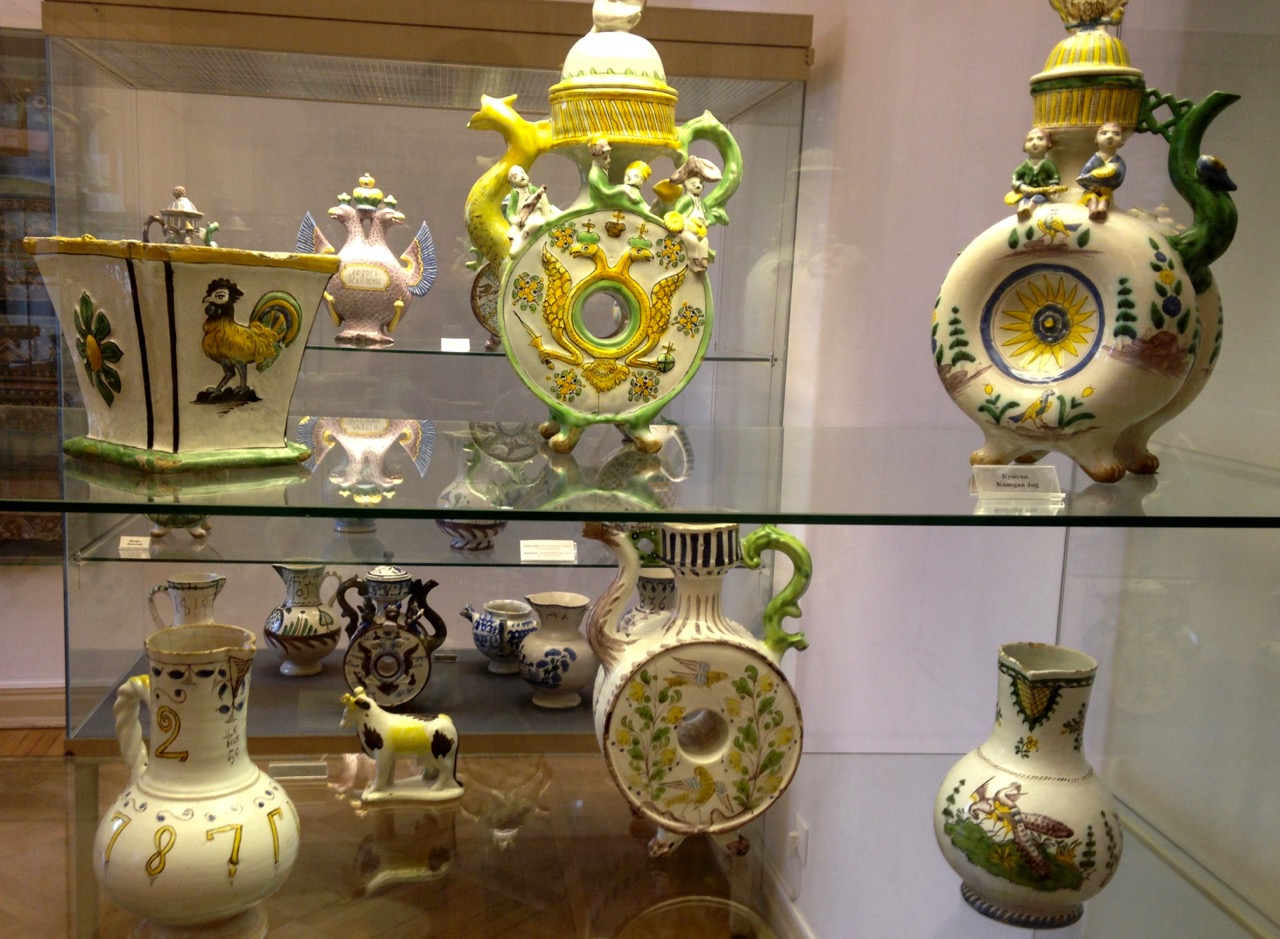
The woodwork, ceramics, metalwork bone carving were all interesting.



The collection of Upper Volga Distaffs was well displayed. You could sense the pride they makers of the distaff had and the importance the place in the household these objects held.
As a noun, a distaff (/ˈdɪstɑːf/, also called a rock) is a tool used in spinning. It is designed to hold the unspun fibers, keeping them untangled and thus easing the spinning process. It is most commonly used to hold flax, and sometimes wool, but can be used for any type of fiber.


One room was full of Russian wood block indigo dyed textiles....BINGO!


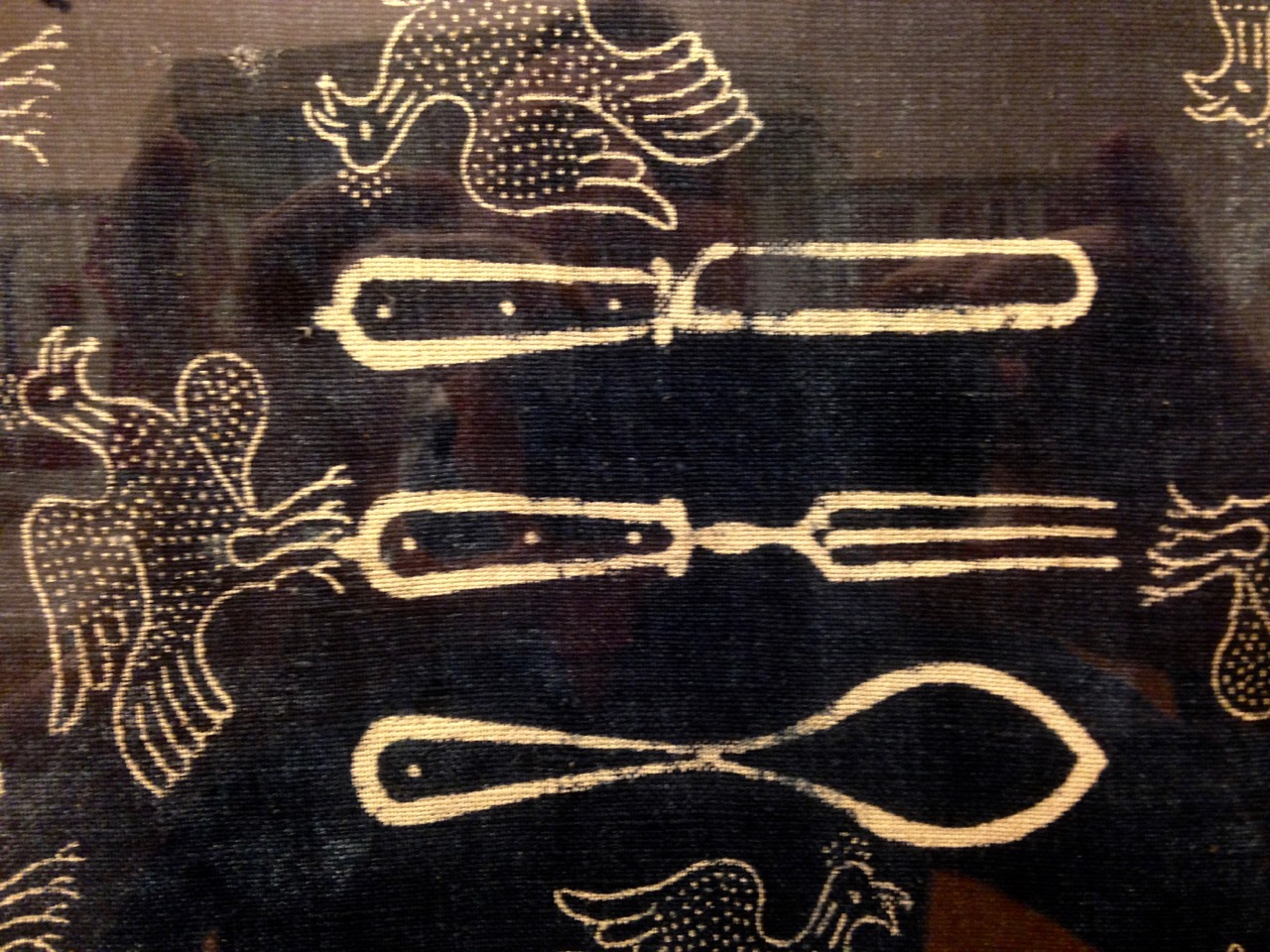


So beautiful. Textiles have so much information in them. More to share.... in a few days.